
The Hidden Cost of “We'll Sort It Later”
Small operational problems are easy to put off when you're busy growing a business. But those little workarounds, repeated mistakes and clunky processes can quietly become bigger and more expensive over time. Discover why tackling inefficiencies early makes growth easier, reduces unnecessary work and helps your business run more smoothly.
Your Business Isn't Disorganised. It Has Outgrown the Way You Work.
Your business isn't necessarily disorganised — it may simply have outgrown the way you used to work. As your team, customers and workload grow, the systems that once worked can start creating friction. Discover the signs that it's time to evolve your processes, reduce the chaos and create simpler ways of working.
5 Signs a Process Needs Fixing
Is your team constantly chasing follow-ups, repeating the same work, answering the same questions, or relying on one person to know how everything works? These are more than everyday frustrations — they’re signs that a process may need fixing. Here are five common warning signs and what you can do about them before they become bigger problems.

The “It’s Just Easier If I Do It Myself” Trap
“It’s just easier if I do it myself.”
Until suddenly, everything depends on you.
When too much of your business lives in your head, you become the bottleneck — answering the same questions, fixing the same issues and stepping into processes that should run without you.
The solution isn’t documenting everything. It’s turning the right founder-dependent processes into simple, repeatable systems that your team can actually use.
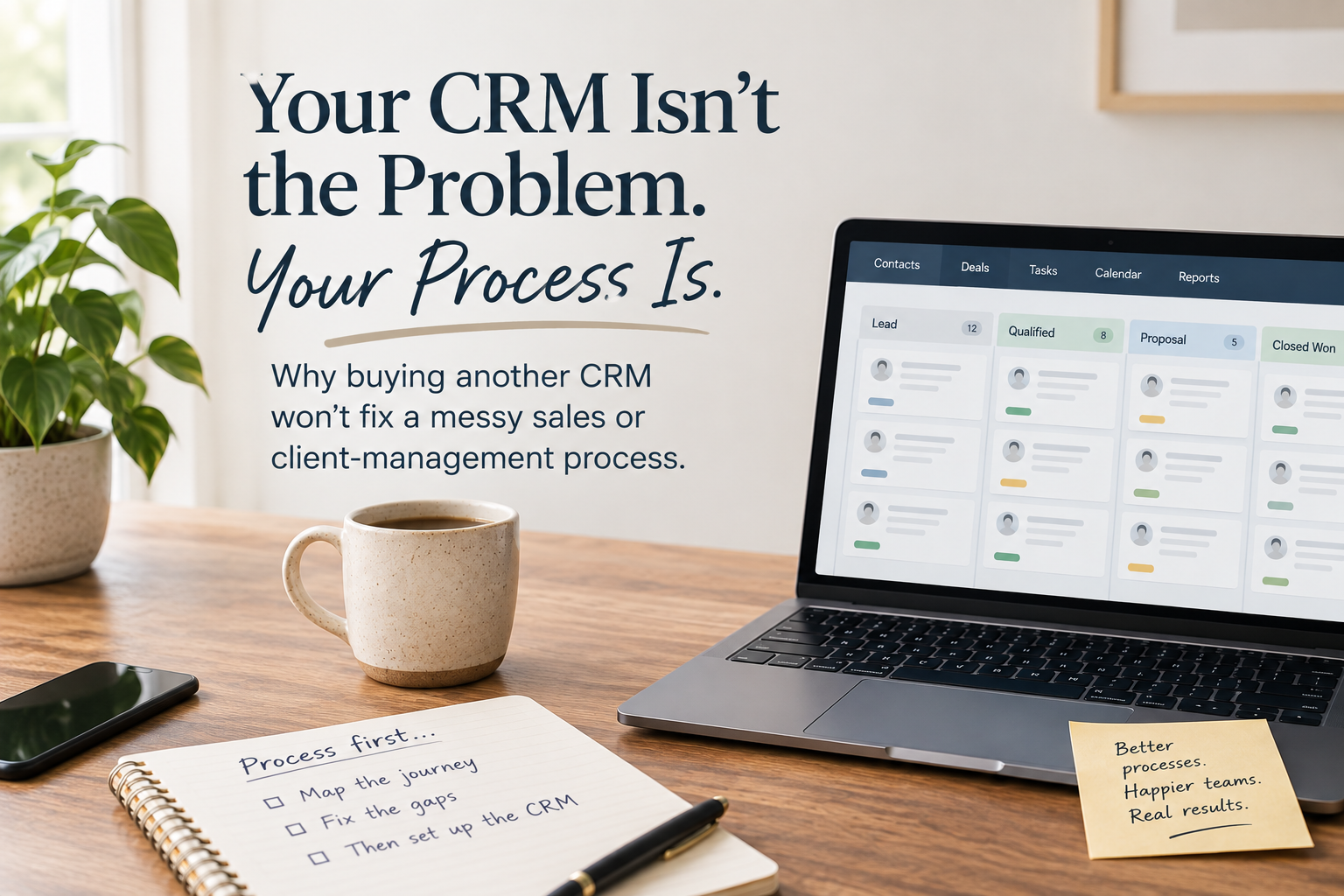
Your CRM Isn't the Problem. Your Process Is.
Think your CRM is the problem? It probably isn't.
If leads are slipping through the cracks, follow-ups are inconsistent, or nobody knows what happens next, buying another piece of software won't fix it. The problem is usually the process behind the system.
Before you invest in another CRM, find out what’s actually broken — and how to build a system your team will actually use.
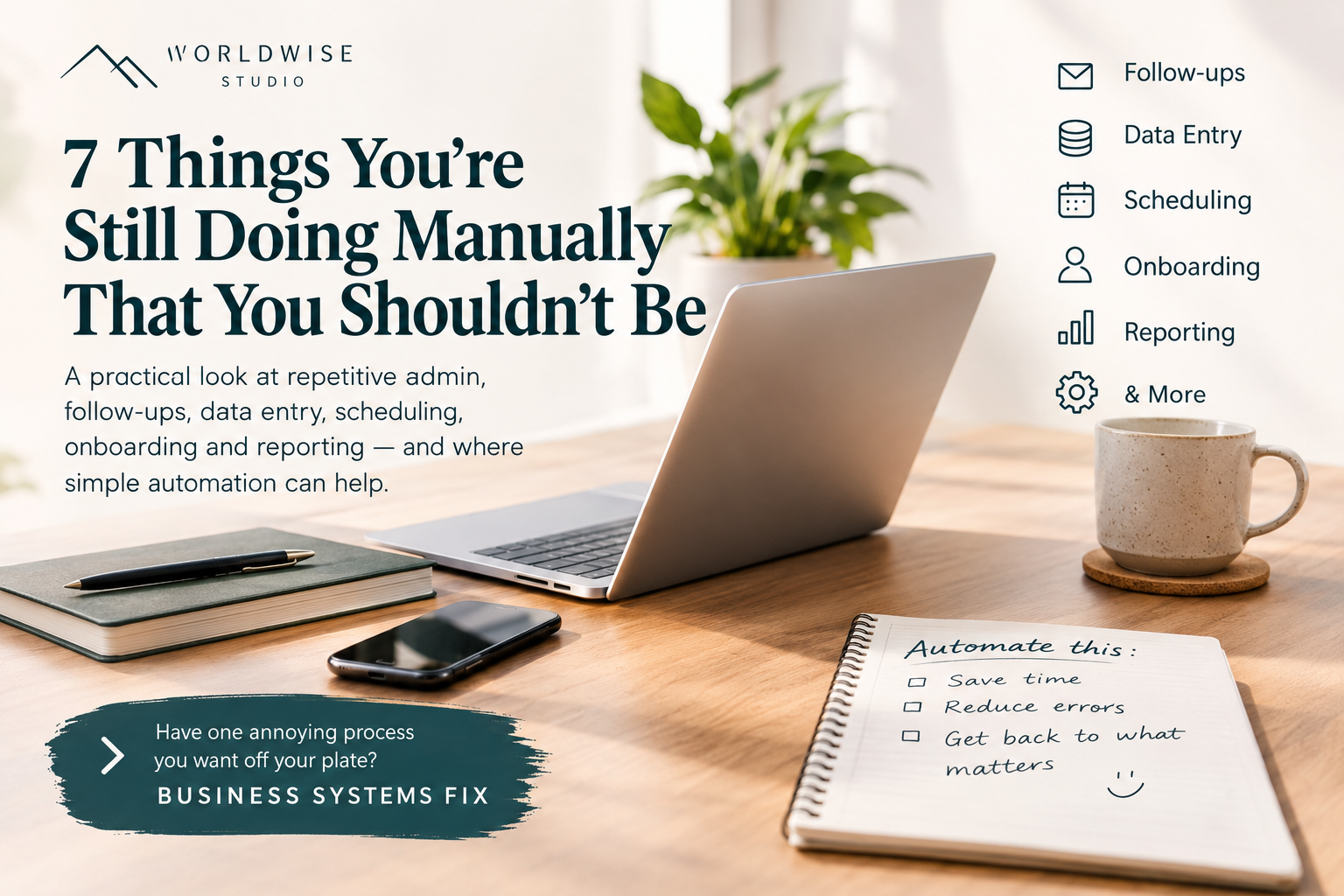
7 Things You're Still Doing Manually That You Shouldn't Be
You’re probably spending more time on admin than you realise.
From chasing follow-ups and copying data to scheduling meetings, onboarding clients and pulling reports, repetitive tasks can quietly eat up hours every week.
The good news? You don’t need a complicated tech stack to get that time back. In this post, we look at 7 everyday tasks you’re still doing manually that could be simplified or automated — and how small changes can make your business run more smoothly.
Because your systems should support you — not create more work.
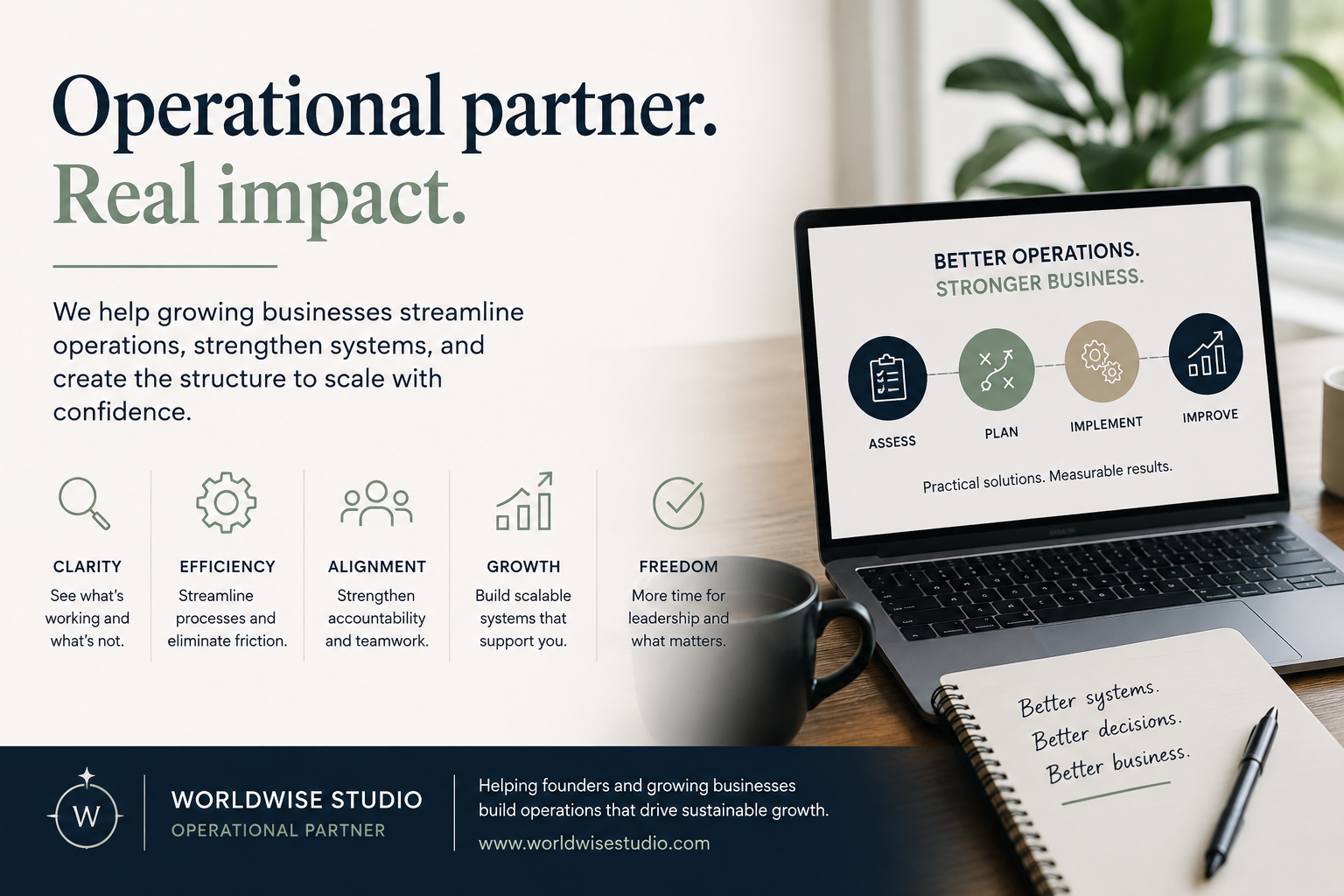
What It’s Like to Work With an Operational Partner
Running a growing business shouldn't mean carrying every decision, solving every problem, or being involved in every process.
As your Operational Partner, I work alongside you to streamline operations, strengthen systems, and create the structure your business needs to grow confidently. Rather than delivering a report and walking away, I become a trusted extension of your team—helping identify bottlenecks, improve workflows, implement practical solutions, and keep key initiatives moving forward.
The result is a business that runs more efficiently, your team has greater clarity and accountability, and you have more time to focus on leadership, strategy, and growth.
Whether you need a focused operational sprint or ongoing strategic support, the goal is the same: building a business that works better—not just harder.
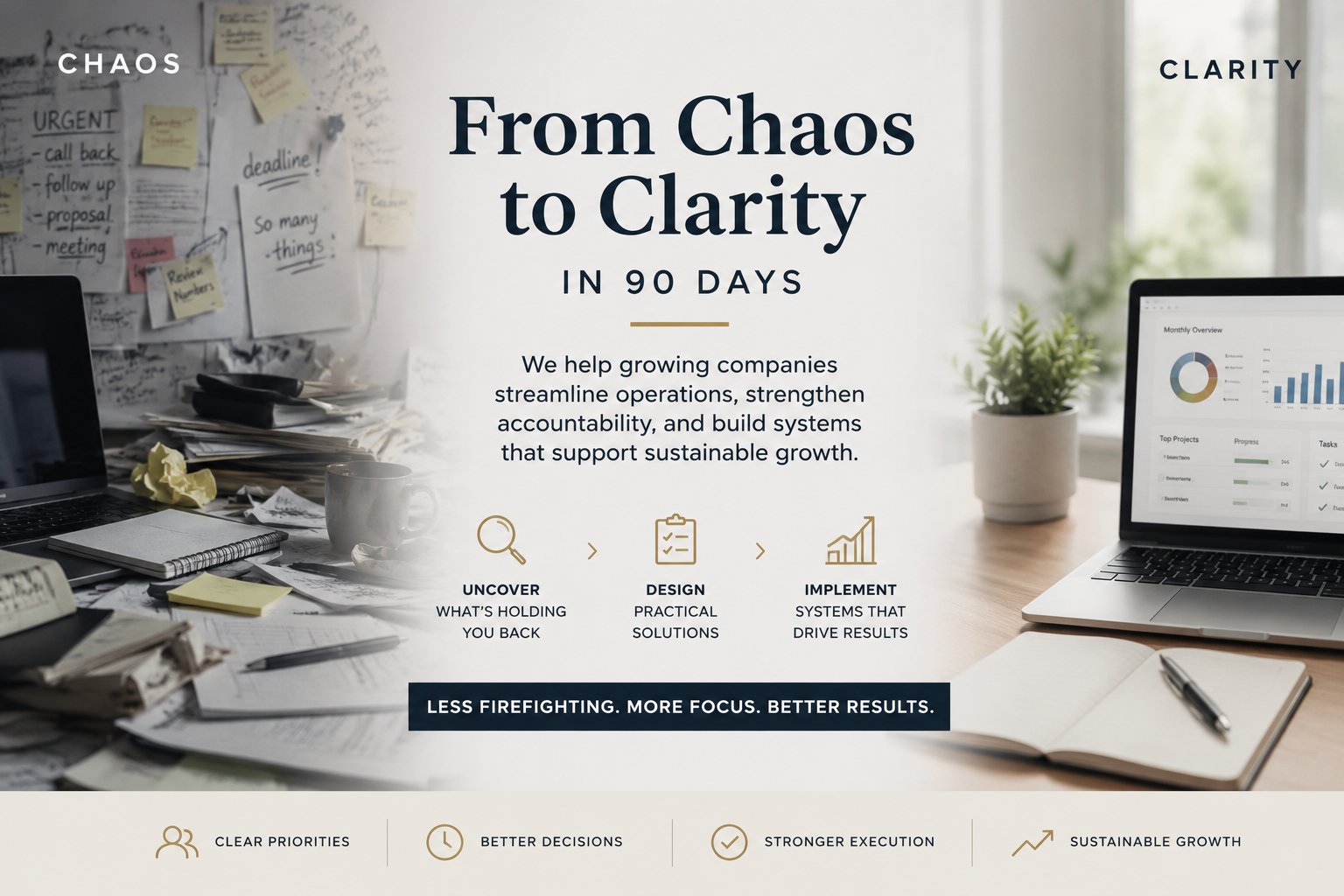
How We Help Companies Go From Chaos to Clarity in 90 Days
Growth should create opportunity—not operational headaches.
As your business expands, it's easy for processes to become inconsistent, priorities to blur, and founders to become the bottleneck. Our 90-Day Operations Sprint is designed to change that.
We work alongside your leadership team to uncover what's slowing your business down, streamline the way work gets done, and implement practical systems that improve accountability, communication, and execution.
The result? A business that's easier to lead, more efficient to operate, and better equipped for sustainable growth.
Less firefighting. More focus. Clearer operations. Better results.
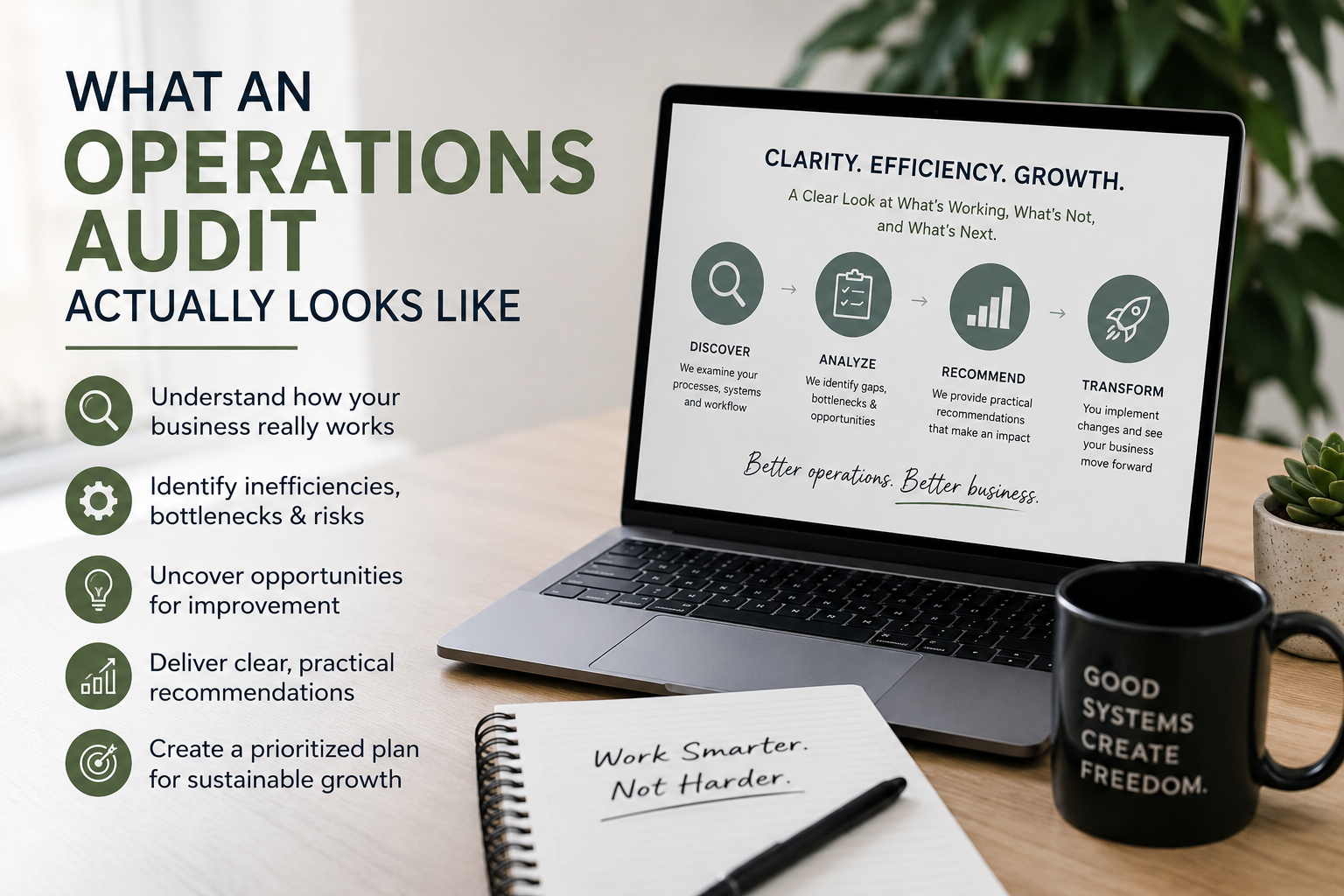
What an Operations Audit Actually Looks Like
An Operations Audit isn't about pointing out what's wrong with your business—it's about uncovering opportunities to make it work better.
I take a holistic look at how your business operates, identifying bottlenecks, inefficiencies, and processes that are holding back growth. From workflows and systems to team responsibilities and communication, I assess what's working, what isn't, and where small changes can create a significant impact.
You'll receive clear, practical recommendations and a prioritized action plan—not an overwhelming report filled with jargon. The result is a business that's more efficient, more scalable, and better equipped for sustainable growth.
Whether you're feeling stretched too thin, experiencing growing pains, or simply want to ensure your operations are supporting your goals, an Operations Audit provides the clarity needed to move forward with confidence.
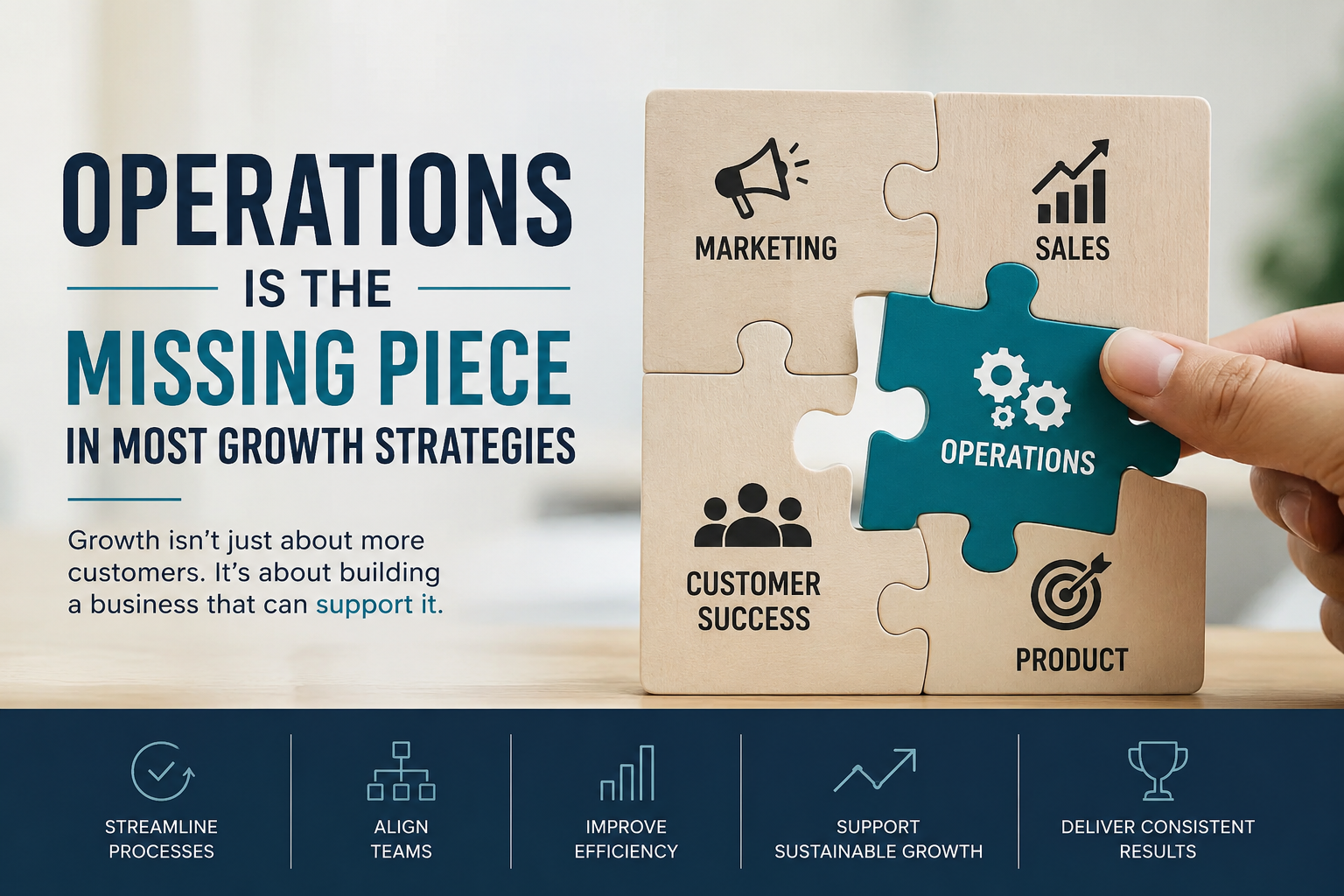
Operations Is the Missing Piece in Most Growth Strategies
Many businesses invest heavily in marketing, sales, and product development to fuel growth. But without strong operations behind the scenes, growth can quickly create bottlenecks, inconsistent customer experiences, and unnecessary stress for founders and teams.
This article explores why operational systems, clear processes, defined responsibilities, and reliable workflows are essential for sustainable growth. Learn how improving operations can create the capacity your business needs to scale efficiently, deliver consistent results, and turn growth into a repeatable process.
Why Most Business Advice Doesn’t Work for Growing Companies
Every growing business reaches a point where what worked yesterday no longer works today. Generic business advice often promises quick fixes, but without understanding the root cause of operational challenges, even the best ideas can fall short.
In this article, we explore why sustainable growth isn't about following the latest trend—it's about building systems that fit your business, your team, and your stage of growth. Learn why Operational Excellence starts with diagnosing the real problem before implementing solutions, and how the right operational foundations can help your business scale with confidence.
Read the full article to discover why better systems—not more advice—drive sustainable growth.
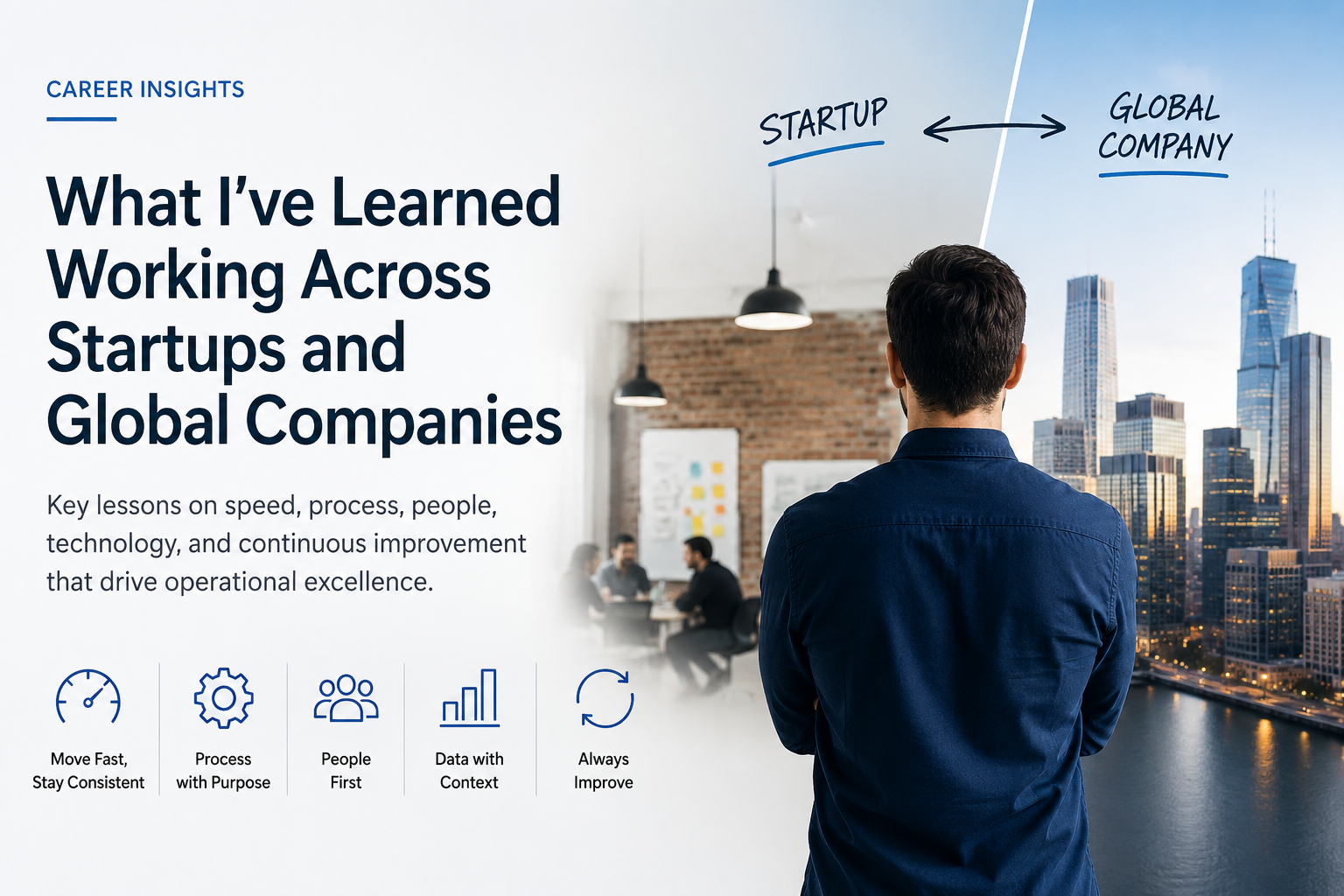
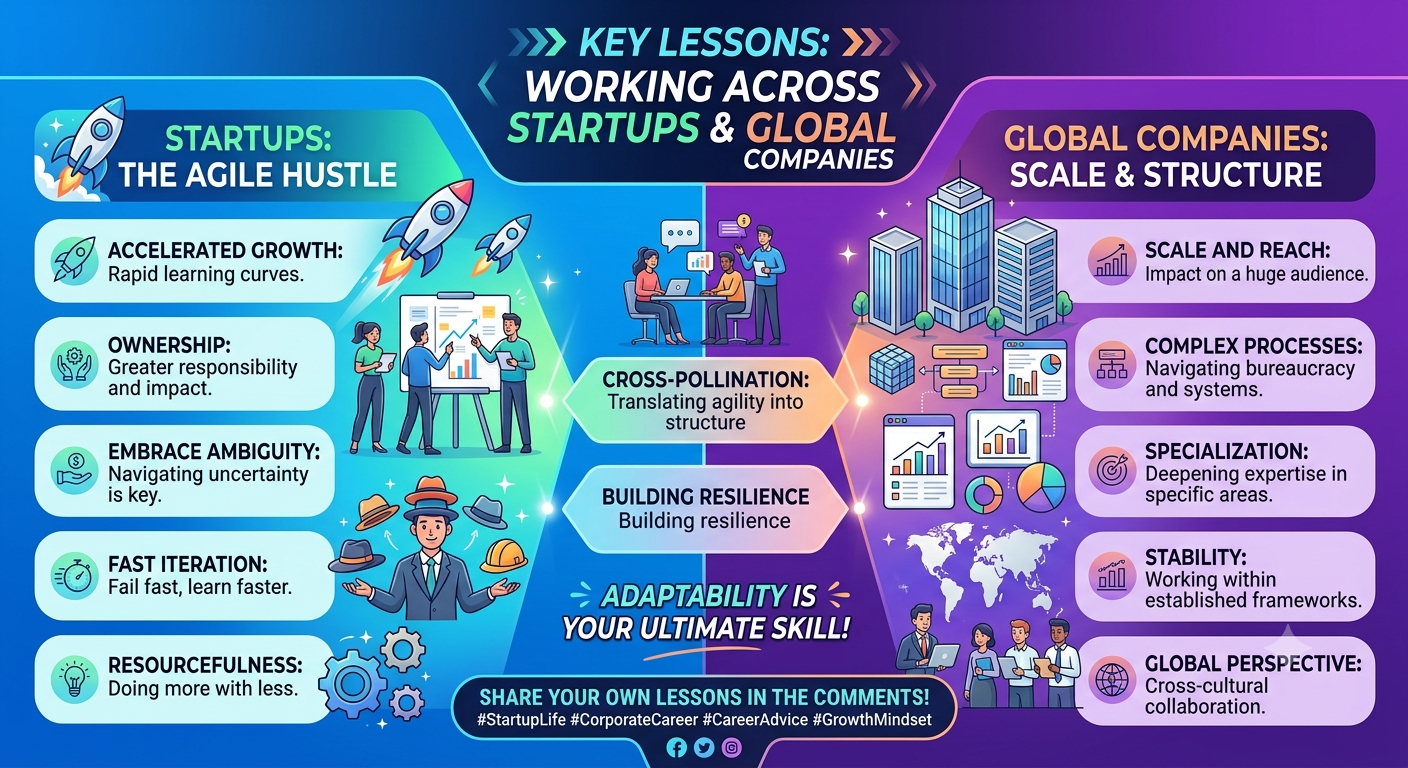
What I’ve Learned Working Across Startups and Global Companies
Having worked in both fast-paced startups and large global organisations, I've seen firsthand that operational success isn't about choosing one approach over the other—it's about taking the best from both. Startups teach speed, adaptability, and innovation, while larger organisations demonstrate the value of scalable processes, consistency, and operational discipline. In this article, I share the key lessons that have shaped my approach to operations, continuous improvement, and building systems that help people do their best work.
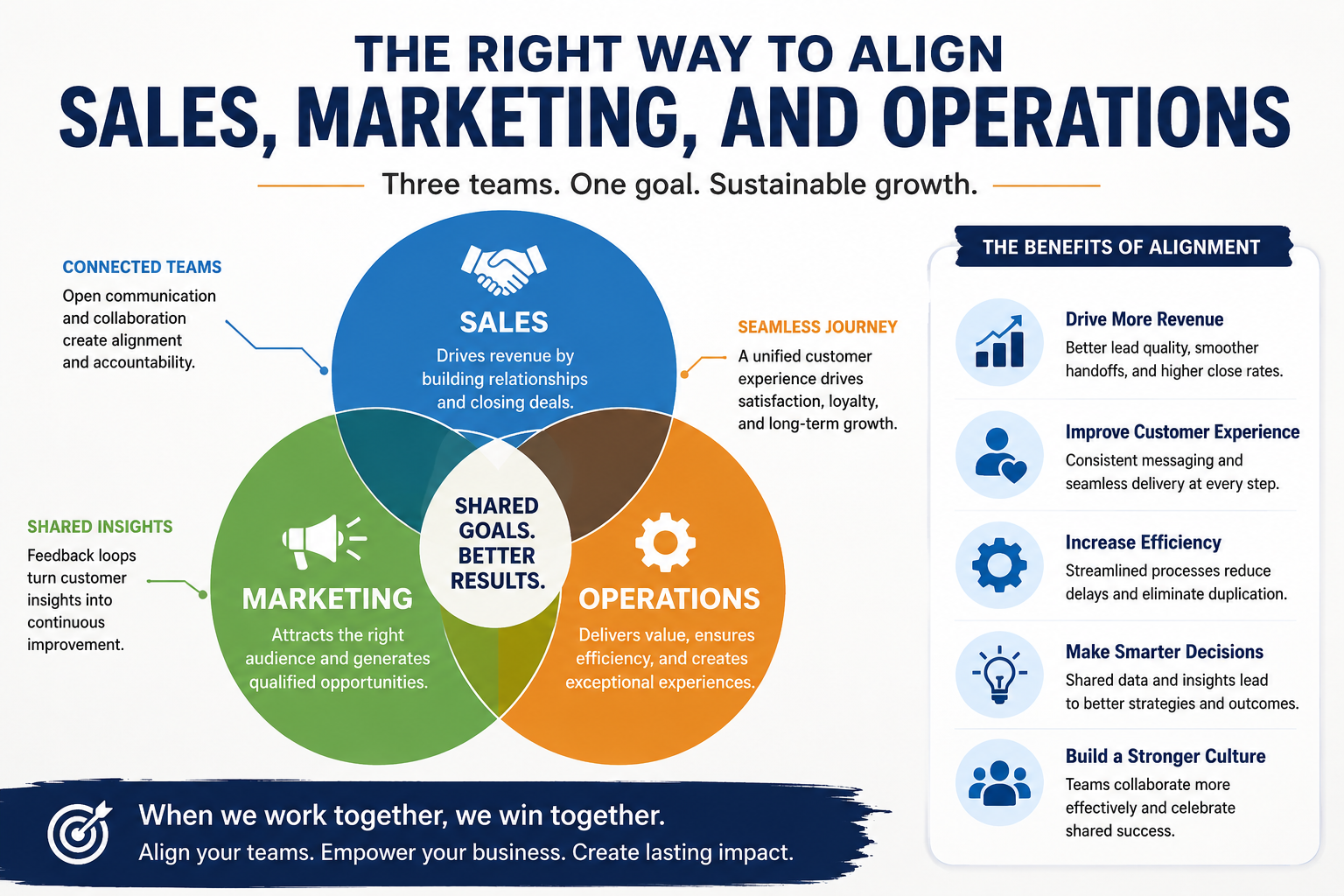
The Right Way to Align Sales, Marketing, and Operations
When Sales, Marketing, and Operations operate in silos, growth becomes harder, customer experiences suffer, and inefficiencies multiply. True business success comes when these teams work together toward shared goals, creating a seamless customer journey from first contact through long-term retention. Learn how aligning your people, processes, and systems can improve collaboration, increase efficiency, and drive sustainable growth across your organization.
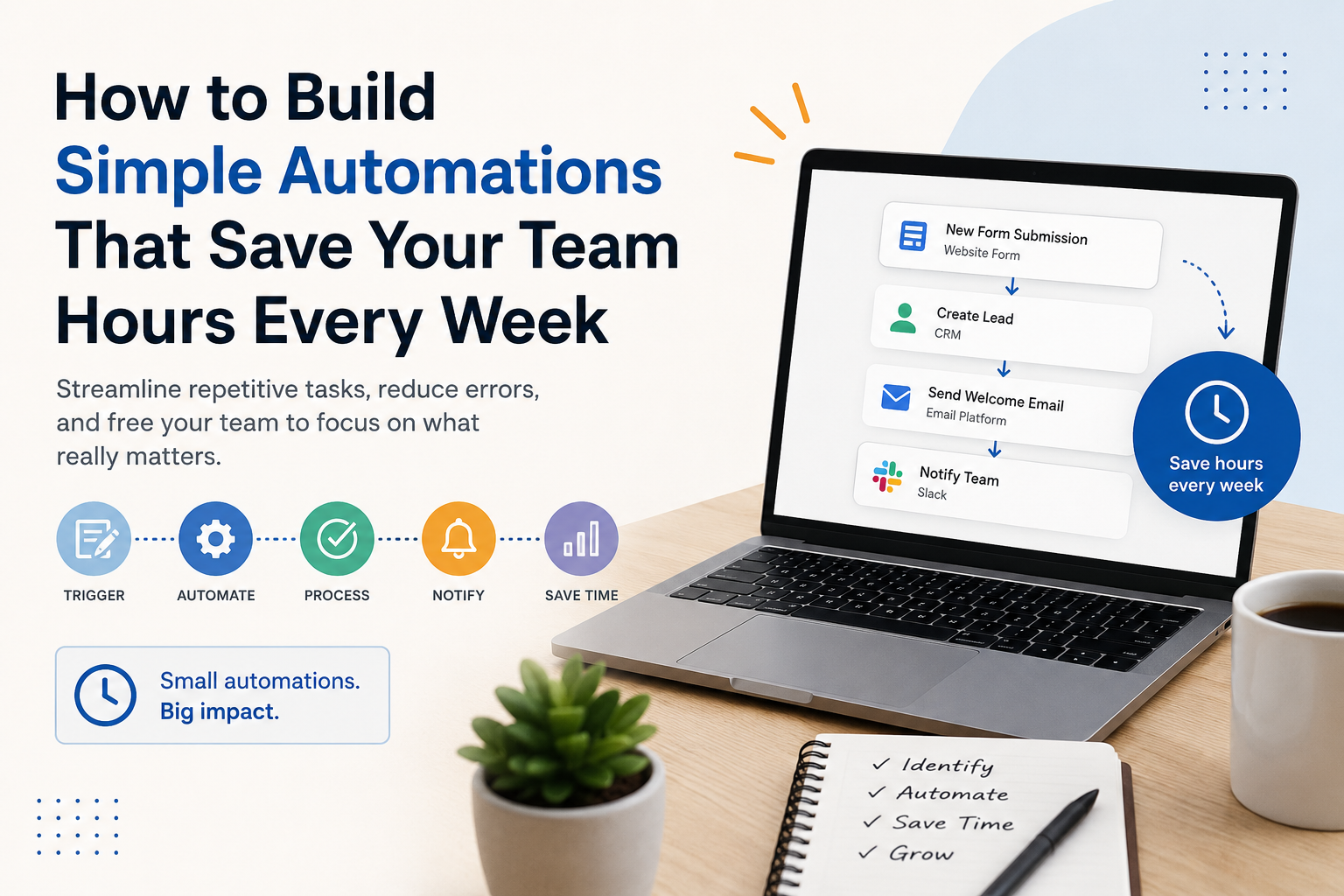
How to Build Simple Automations That Save Your Team Hours Every Week
Manual tasks may seem small, but they add up quickly. From data entry and follow-up emails to approvals and reporting, repetitive work can consume hours of your team's time every week. Learn how to identify automation opportunities, streamline workflows, and implement simple solutions that boost productivity, reduce errors, and free your team to focus on higher-value work.
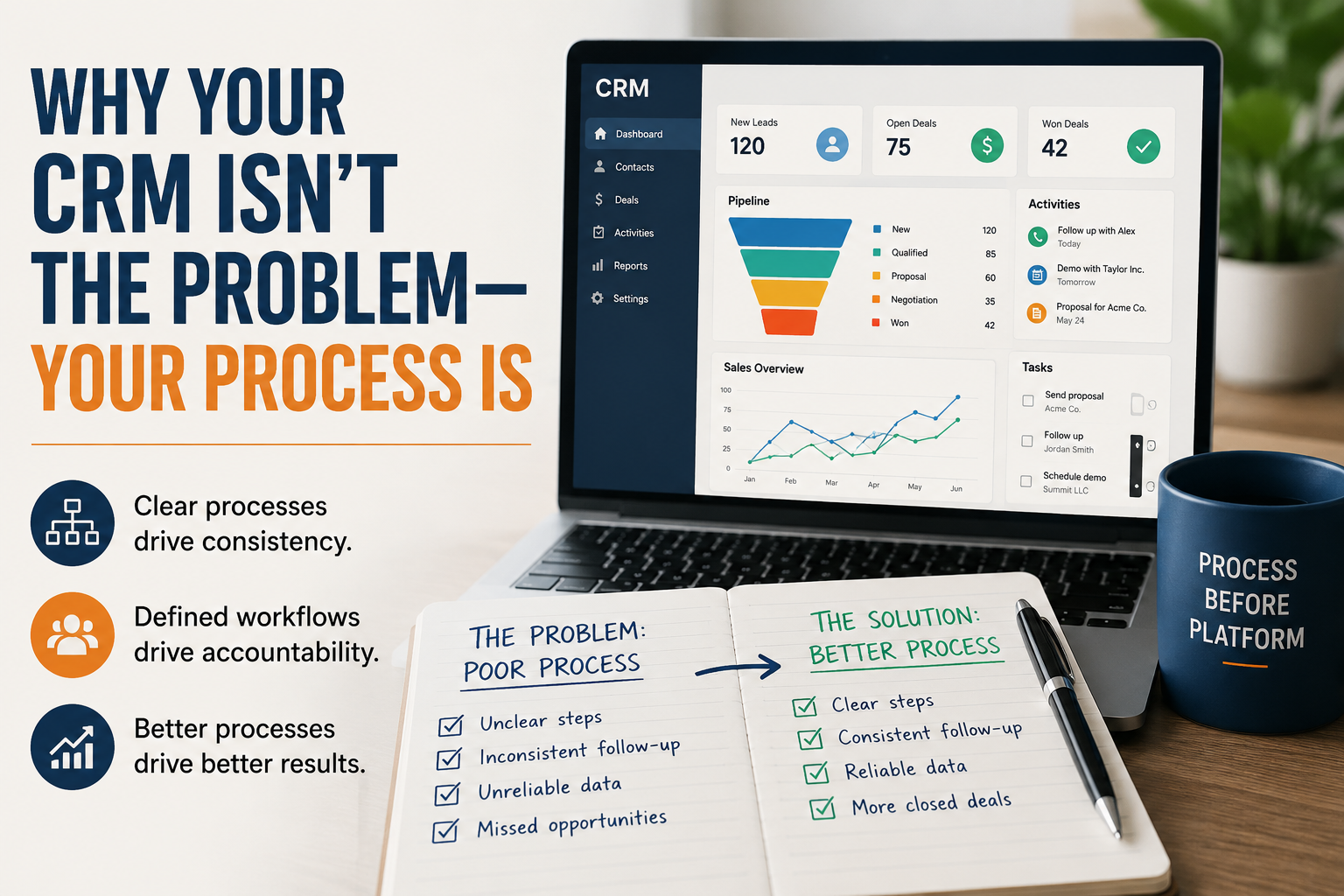
Why Your CRM Isn’t the Problem — Your Process Is
Struggling with inconsistent sales data, missed follow-ups, or unreliable reporting? The issue may not be your CRM. Many businesses invest in new software expecting it to solve operational challenges, only to discover the same problems remain. Learn why clear processes, defined workflows, and accountability matter more than technology—and how to build a CRM system that actually supports growth.
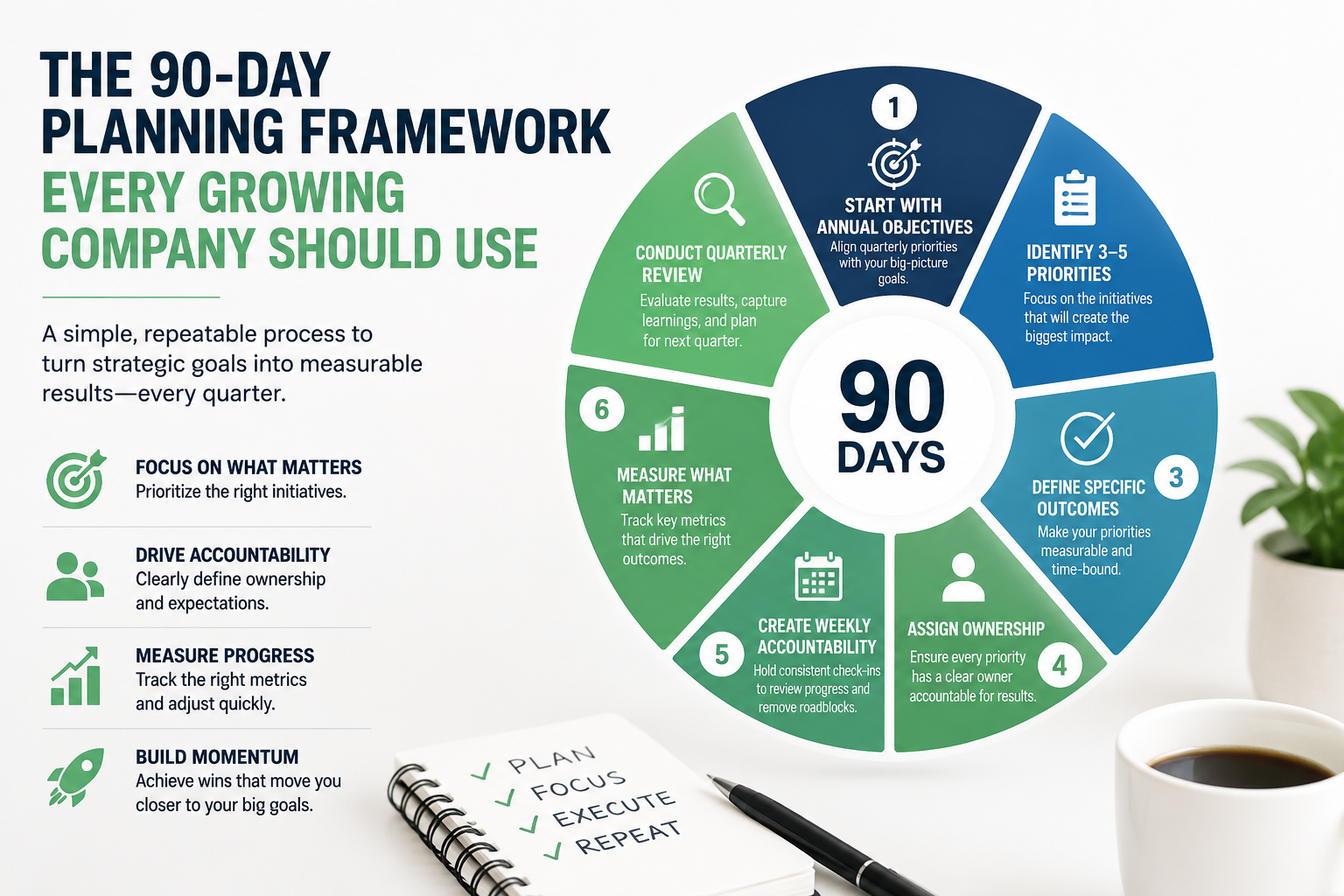
The 90-Day Planning Framework Every Growing Company Should Use
Most growing companies struggle not because they lack vision, but because they lose focus. A 90-day planning framework bridges the gap between long-term strategy and day-to-day execution, helping leadership teams prioritize what matters most, improve accountability, and create measurable progress every quarter. Learn how to implement a simple quarterly planning process that keeps your organization aligned, agile, and moving forward.
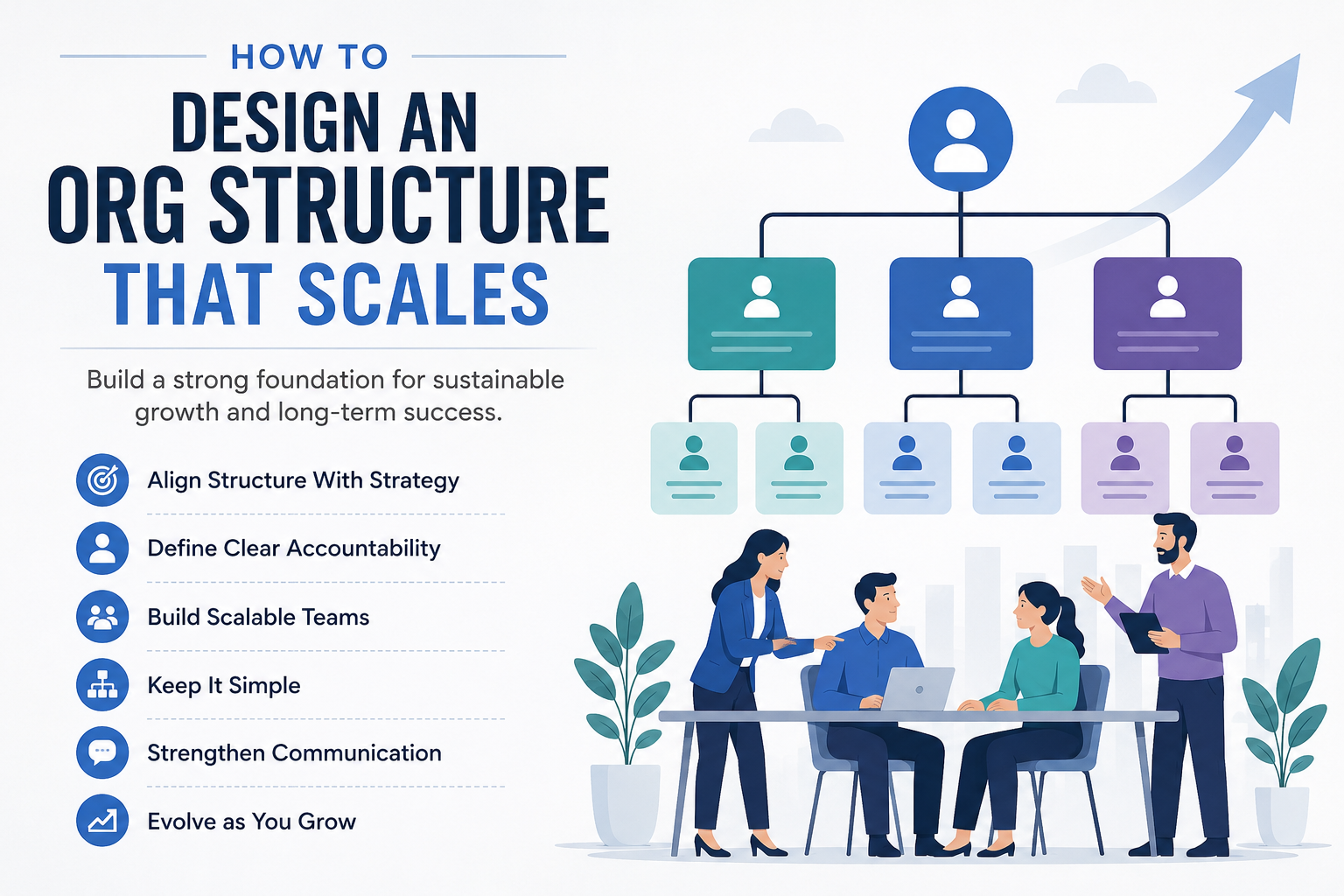
How to Design an Org Structure That Scales
As businesses grow, the structure that once worked can quickly become a source of confusion, bottlenecks, and burnout. Scaling successfully is not just about hiring more people — it is about designing clear accountability, strong communication, and leadership systems that support long-term growth.
In this article, discover practical strategies for building an organizational structure that scales with your business while staying efficient, adaptable, and aligned with your goals.
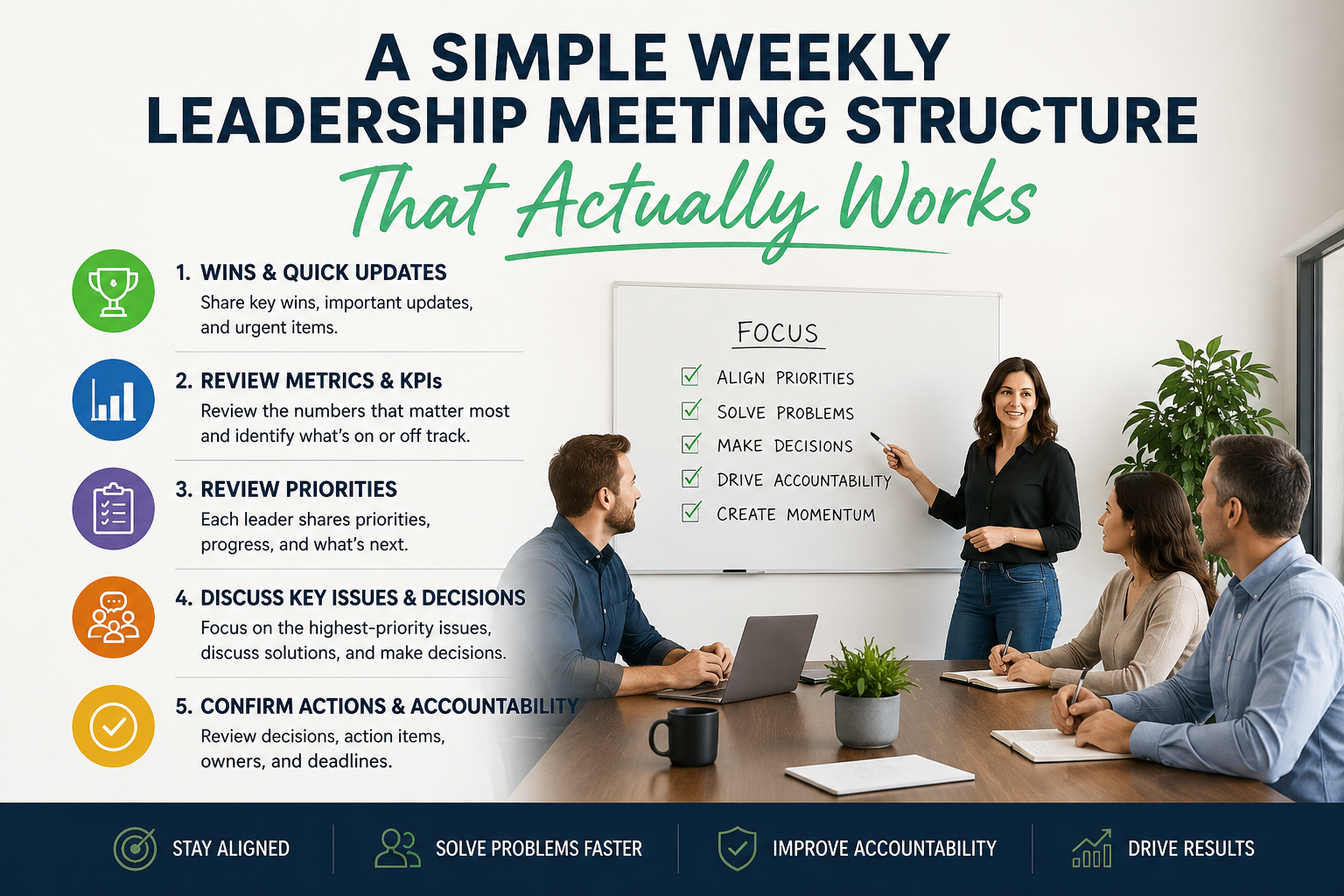
A Simple Weekly Leadership Meeting Structure That Actually Works
Running productive leadership meetings should not feel impossible. In this blog, we break down a simple weekly leadership meeting structure that helps teams stay aligned, solve problems faster, improve accountability, and maintain momentum without wasting time. If your meetings feel reactive, unfocused, or unproductive, this framework can help create clarity and stronger execution across your organization.
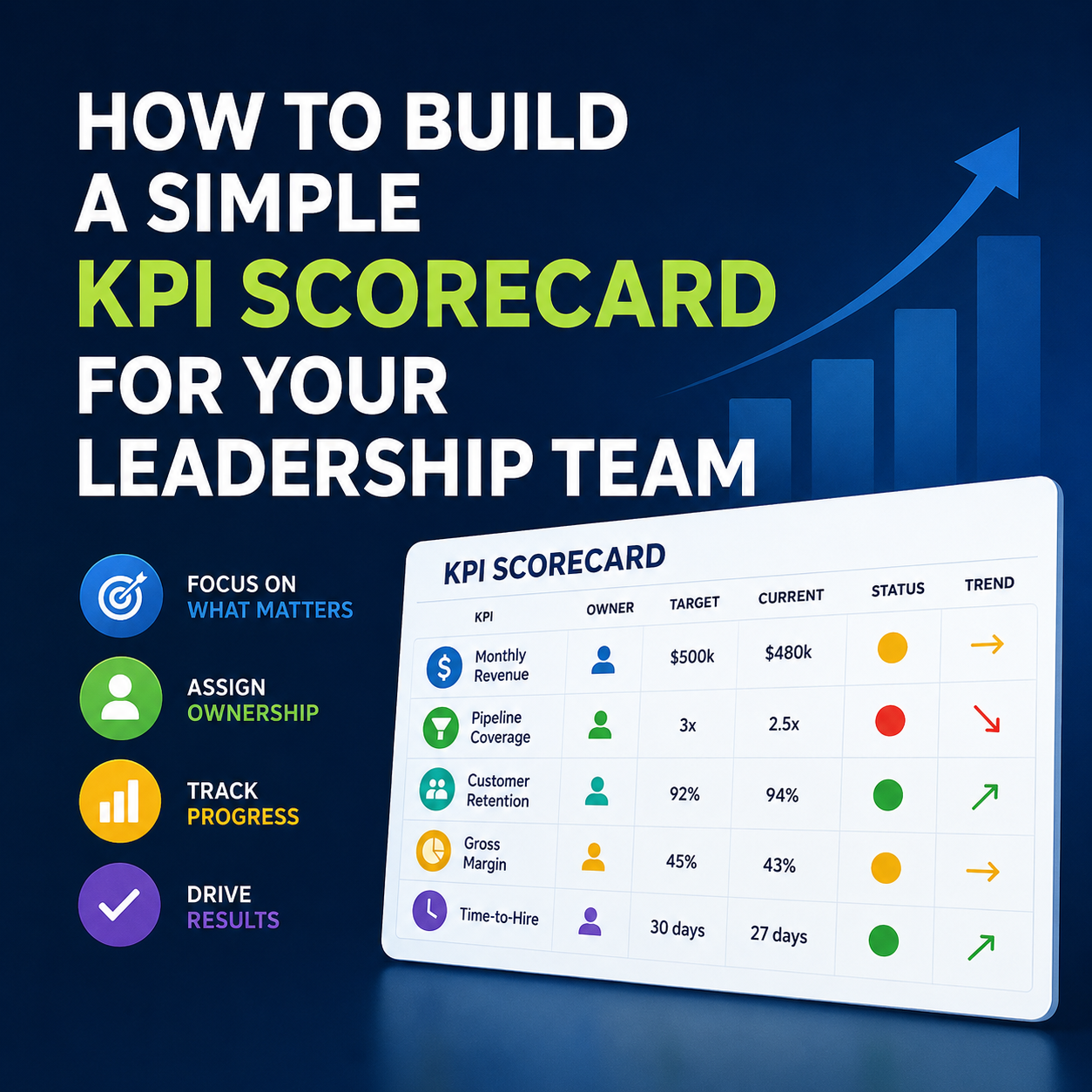
How to Build a Simple KPI Scorecard for Your Leadership Team
Many leadership teams track endless data but still struggle with alignment and clarity. A simple KPI scorecard changes that. This article breaks down how to build a practical leadership dashboard that keeps your team focused on the metrics that actually drive performance, accountability, and growth — without overcomplicating the process.
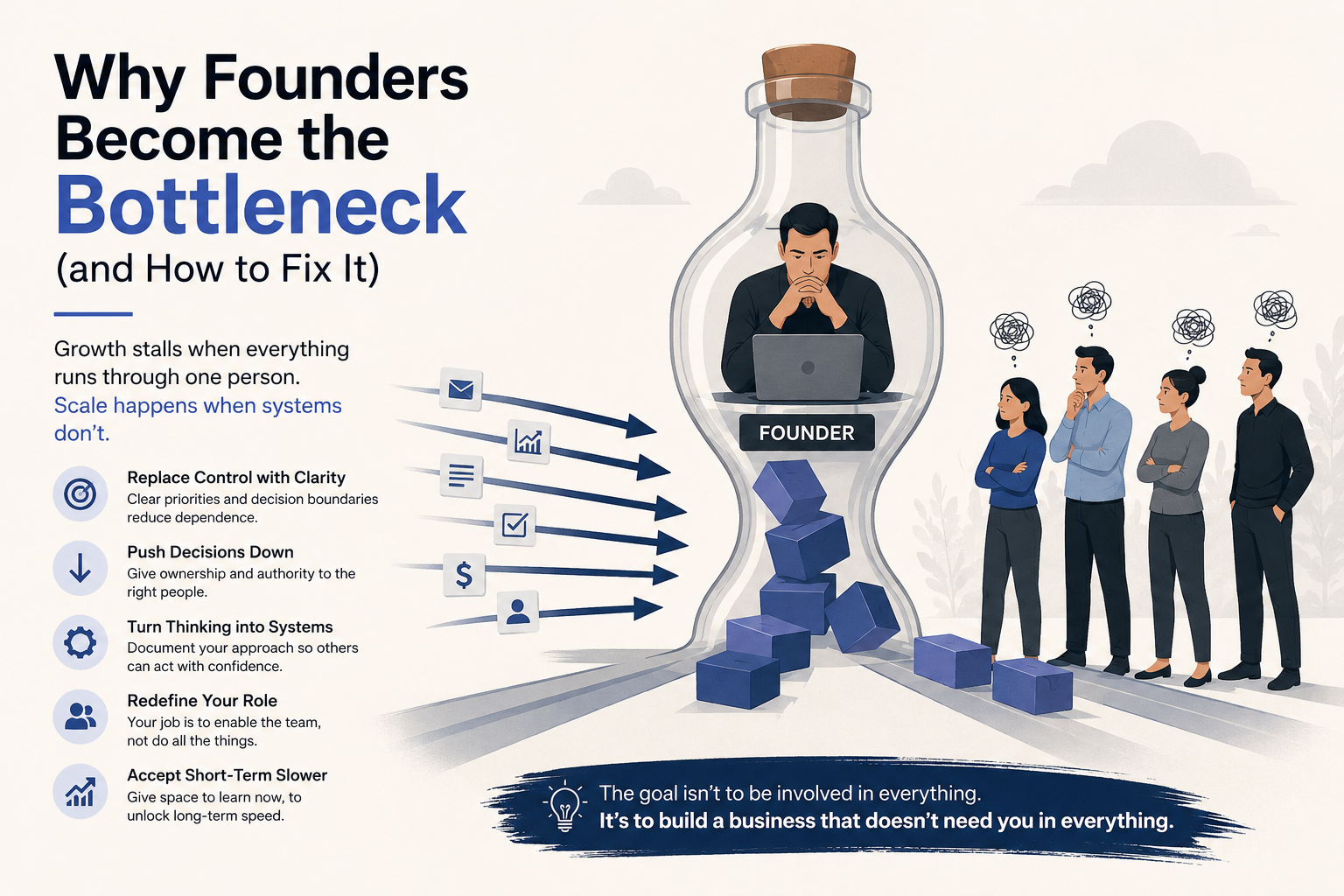
Why Founders Become the Bottleneck (and How to Fix It)
As your business grows, the habits that once made you successful can quietly start to hold you back. Many founders don’t realize they’ve become the bottleneck — until decisions slow down, teams hesitate, and growth begins to stall. This piece explores why it happens, the hidden costs, and the practical shifts needed to move from doing everything yourself to building a business that scales beyond you.